

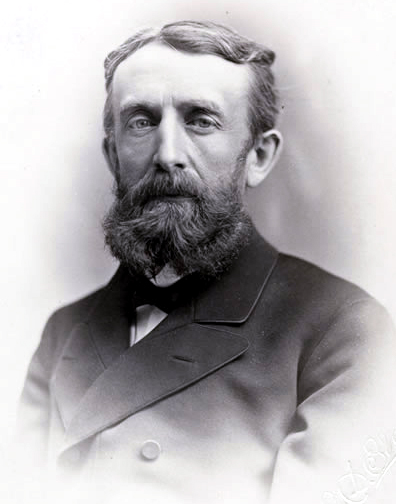
Who Was Andrew Dickson White?
Alright, let’s talk about Andrew Dickson White. He wasn’t an engineer himself, but he was a hugely important figure in shaping American universities, including places where electrical engineers learn their stuff today. Think of him as one of the ‘founding fathers’ of the kind of modern university environment we have. He lived from 1832 to 1918. He wore many hats: historian, educator, and even a diplomat. But his most lasting impact, especially for places like Cornell University, was in changing how higher education worked.
He’s known for starting Cornell University, one of those famous Ivy League schools, and being its first president for nearly 20 years. A big deal about him was how he pushed to teach more subjects in college, not just the old traditional ones. He was also involved in politics, serving in New York state government and later as the U.S. representative (like an ambassador) to Germany and Russia.
White also came up with something called the “conflict thesis.” This idea suggests that science and religion have historically been at odds with each other. He wrote a big book about it, nearly 800 pages long, called History of the Warfare of Science with Theology in Christendom. We’ll dive into that later.
So, why is he relevant in the world of Electrical Engineering? Because the universities and the educational approach he championed created the space and freedom for fields like Electrical Engineering to develop and thrive. Before people like White, universities were often very traditional and tied to religious teachings. They weren’t always set up to explore new scientific and technical areas freely.
Early Life and Education
Andrew Dickson White was born in Homer, New York, on November 7, 1832. His parents were Clara (her father, Andrew Dickson, was a state representative) and Horace White. Horace came from a farming family, but their farm was lost in a fire when he was young. Despite not having much formal schooling himself and facing poverty after the fire, Horace became a successful businessman and opened Syracuse Savings Bank in 1839. Andrew had one younger brother. Andrew was baptized in 1835 at a local church in Homer.
Some interesting family connections: one of his cousins, Edwin White, became a noted artist in the Luminism and Hudson River School styles. His nephew, also named Horace White, became the Governor of New York.
Andrew’s path to college wasn’t straightforward. His father really wanted him to go to Geneva College (now Hobart and William Smith Colleges), a small Episcopalian school. Andrew started there in the fall of 1849. He joined a fraternity, Sigma Phi, and even edited their publication, The Flame. He stayed involved with Sigma Phi his whole life, later starting the chapter at Cornell and serving as national president. But he felt like his time at Geneva was “wasted” because it wasn’t one of the bigger, more diverse universities he wanted to attend. He dropped out in 1850.
After some disagreements with his father, he finally convinced him to let him transfer to Yale College. This was a turning point. At Yale, he was classmates with Daniel Coit Gilman, who would later become the first president of Johns Hopkins University – another key player in American higher education history. White and Gilman were close friends, part of a secret society called Skull and Bones, and even traveled together in Europe after college. They also worked together later on a boundary commission regarding Venezuela. His roommate at Yale, Thomas Frederick Davies Sr., became a bishop. His graduating class of 1853 was pretty notable, including a poet, a U.S. Attorney General, and a missionary. White felt a strong influence from Professor Noah Porter (who also became Yale’s president), who taught him rhetoric and remained a friend.
At Yale, White got involved in writing and debating. He edited the Yale Literary Magazine and was part of a debating society called Linonia. He showed early signs of his intellect by winning the Yale literary prize for an essay on statesmanship while he was still a junior, which usually went to seniors. He also joined the junior society Psi Upsilon. In his senior year, he won two more prestigious prizes for public speaking and disputation, including the De Forest prize, which was the largest prize of its kind back then. He wasn’t just about books, though; he was also on the Yale crew team and competed in one of the earliest Harvard-Yale boat races in 1852.
After graduating from Yale in 1853, White traveled and studied in Europe with his friend Gilman. He spent time at famous institutions like the Sorbonne, the Collège de France, and the University of Berlin between 1853 and 1854. Fun fact: he even worked as a translator for the U.S. Ambassador to Russia, Thomas H. Seymour, stepping in after Gilman. This is interesting because he hadn’t studied French (the language used in diplomacy and at the Russian court then) before going to Europe. He picked it up quickly! When he returned to the U.S., he went back to Yale to get a Master of Arts degree and was inducted into the Phi Beta Kappa honors society in 1856.
Career
White had a busy career that spanned different fields: teaching, founding a major university, writing influential books, and serving his country abroad.
Academia
His first teaching job was in October 1858 at the University of Michigan. He became a professor of History and English literature and stayed there until 1863. While at Michigan, he did something practical and visible: he got students involved in planting elm trees along the main walkways of the campus, known as The Diag. Those trees are still a part of the landscape and a reminder of his time there.
During 1862 and 1863, he took a break from teaching. The American Civil War was happening, and he traveled to Europe to try and convince France and Britain to help the United States, or at least not help the Confederate states.
Founding of Cornell University
This is where White made his biggest mark, especially in the context of education that includes fields like Electrical Engineering.
In 1863, White returned to Syracuse for business. He was elected to the New York State Senate that November. In the Senate, he met Ezra Cornell, a self-made man who had made his fortune in the telegraph business. Cornell was from Ithaca and, importantly, shared White’s vision for education.
The U.S. government had passed the Morrill Land-Grant Colleges Act in 1862. This act gave states pieces of federal land (or grants from the sale of that land) to fund colleges focused on agriculture, mechanical arts, and military science. It was a revolutionary idea aimed at providing practical education to more people, not just the traditional liberal arts for the elite.
Morrill Land-Grant Colleges Act (1862)
This was a U.S. federal law that provided grants of land to states to finance the establishment and maintenance of colleges that taught agriculture, mechanical arts, and military science. This act encouraged the development of practical, scientific, and technical education alongside traditional studies, significantly broadening the scope of higher education in America.
New York State received funding from this act. The initial idea among senators was to spread this money among the many small existing colleges in their districts. But White argued strongly that the money would have a much greater impact if it was used to create or support just one strong university. Ezra Cornell agreed.
Cornell, who was quite wealthy, asked White what he could do with his own money for the state. White immediately suggested starting or strengthening an institution of higher learning. This conversation sparked their joint effort.
White wanted the new university to be located in Syracuse because it was a major transportation hub, making it easier for faculty and students to get there. However, Ezra Cornell had a bad experience in Syracuse years earlier (he was robbed) and insisted it be located in his hometown of Ithaca, offering land on his large farm there. White eventually agreed and also convinced Cornell to let the university be named after him, following the common practice of naming institutions after major donors.
On February 7, 1865, White introduced the bill to establish “the Cornell University.” After several months of discussion and debate, the bill was signed into law on April 27, 1865, by Governor Reuben E. Fenton. Cornell became New York’s land-grant institution.
Why is this important for Electrical Engineering? Cornell University, as envisioned by White and Cornell, was designed from the ground up to be different. White famously said it would be “an asylum for Science—where truth shall be sought for truth’s sake, not stretched or cut exactly to fit Revealed Religion.” This was a direct challenge to the prevailing model where most private universities were founded by religious denominations and focused heavily on religious training and classical studies.
By emphasizing science, practicality (as required by the Morrill Act), and seeking truth independently, Cornell provided a fertile ground for new scientific and technical disciplines to develop. Electrical Engineering, as a field, really started to emerge in the late 19th and early 20th centuries. Institutions like Cornell, with their commitment to science, research, and practical application, were essential for establishing EE departments, conducting research, and training the first generations of electrical engineers. White’s foundational vision created the environment where such a field could be embraced, taught, and advanced without being constrained by older, non-scientific viewpoints.
White became Cornell’s first president and also taught History there. He commissioned the university’s first architecture student, William Henry Miller, to design his official residence on campus.
White was recognized for his intellectual contributions, being elected to the American Philosophical Society in 1869 and the American Antiquarian Society in 1884.
Later, in 1891, Leland and Jane Stanford were starting Stanford University in California. They asked White to be its first president, but he turned them down. Instead, he recommended David Starr Jordan, one of his former students.
White was also deeply committed to civil rights. In 1865, he wrote arguments supporting citizenship for Black people and advocating for the abolition of slavery using the powers available to the government during the war.
Conflict Thesis
Remember that big book he wrote? This is where that comes in.
When Cornell was founded, White made it clear it would be a place for science based on seeking truth, not fitting into existing religious ideas. This wasn’t the norm at the time.
In 1869, he gave a talk called “The Battle-Fields of Science.” In it, he argued, using historical examples, that when religion tried to get in the way of scientific progress, it usually led to bad outcomes. Over the next 30 years, he kept working on this idea, looking at historical cases across almost all scientific fields throughout the history of Christianity. He also refined his focus from “religion” generally to “ecclesiasticism” (church influence) and specifically “dogmatic theology” (strict, inflexible religious doctrines).
Dogmatic Theology
This term refers to theological systems that rely heavily on established doctrines or dogmas as fixed truths, often derived from religious authority or interpretation of scripture. In the context of the conflict thesis, it represents the rigid religious frameworks that White argued historically clashed with the open-ended inquiry and findings of science.
His main work on this was the two-volume A History of the Warfare of Science with Theology in Christendom (published in 1896). In this book, he put forward his “conflict thesis.”
Conflict Thesis
This historical idea, popularized by Andrew Dickson White and John William Draper, suggests that there has been a historical and ongoing fundamental conflict or antagonism between science and religion (or specifically, dogmatic theology) throughout history. Proponents argue that religious institutions and beliefs have often actively resisted or suppressed scientific progress and discovery.
At first, another book, John William Draper’s History of the Conflict between Religion and Science (1874), was more popular. But White’s book became very influential in the late 19th century, shaping discussions about the relationship between science and religion.
It’s worth noting that most current historians of science don’t fully agree with White’s conflict thesis; they see the relationship between science and religion as much more complex, involving cooperation and dialogue as well as conflict. However, the idea of a “warfare” between science and religion still pops up in popular discussions, especially among critics of religion.
Relevance to EE: While not about electrical circuits, this historical discussion is relevant to the environment in which scientific and engineering fields like EE developed. The struggle for science to be accepted as a legitimate, independent way of understanding the world, sometimes against institutional resistance, is part of the broader context of scientific and technological advancement. White’s arguments contributed to the intellectual climate that valued independent scientific inquiry, a cornerstone for all engineering disciplines.
Diplomat
Beyond education, White also had a significant career in international relations.
While he was still president of Cornell, he took time off in 1871 to serve as a Commissioner to Santo Domingo (now the Dominican Republic). President Ulysses Grant wanted a team, including White, Benjamin Wade, and Samuel Howe, to figure out if the U.S. should annex the Dominican Republic. Their report recommended annexation, but Grant couldn’t get enough political support to make it happen.
Later, he was appointed as the U.S. representative (ambassador) to Germany from 1879 to 1881. After returning to the States, he was elected the first president of the American Historical Association (1884–1886). Local Republicans in New York nominated him for governor and Congress, but he didn’t win those races.
He resigned as Cornell’s president in 1885. After that, he continued his diplomatic work, serving as the minister (another term for a type of diplomat or ambassador) to Russia from 1892 to 1894. He also headed the American delegation at the important Hague Peace Conference in 1899 and served again as ambassador to Germany from 1897 to 1902.
In 1904, he published his Autobiography, which he wrote while relaxing in Italy after retiring from his diplomatic roles. Interestingly, Cornell’s third president, Jacob Gould Schurman, also later served as ambassador to Germany (1925-1929).
At the start of World War I, White initially sympathized with Germany due to his strong personal and professional connections there. However, by mid-1915, he stepped back from this stance and remained neutral publicly and privately. In 1916, President Woodrow Wilson appointed him to a peace commission regarding a treaty with China. By late 1916, he started reducing his public duties, resigning from boards like the Smithsonian and the Carnegie Institution.
Bibliophile
White was a passionate book collector, and this is another area where he left a significant mark on Cornell. Over his life, he built up a huge personal library.
He had a particularly large collection of books on architecture, which was reportedly the biggest architecture library in the U.S. at the time. He generously donated these 4,000 books to the Cornell University Library, specifically so they could be used for teaching architecture. He also donated the rest of his vast collection, totaling about 30,000 books, to the library.
In 1879, White hired George Lincoln Burr, who had been a student assistant, to manage his rare books collection. Burr became White’s close collaborator and continued to build the collection until 1922. He traveled around Europe specifically finding and acquiring books that White wanted for the library. Thanks to their efforts, Cornell built impressive collections on topics like the Reformation, witchcraft (which was a significant historical topic for understanding societal change), and the French Revolution.
Today, these books are housed at Cornell, mainly in the university archives and in a beautiful room called the Andrew Dickson White Reading Room (officially the “President White Library of History and Political Science”) in Uris Library. This reading room was designed by William Henry Miller, the same student White commissioned to build his mansion.
While serving in Russia, White met the famous author Leo Tolstoy. Tolstoy was fascinated by Mormonism (the Latter-Day Saints or LDS movement), which sparked White’s interest too. Before this, White had seen the LDS as a dangerous group. After returning to the U.S., he used Cornell’s location near the birthplace of Mormonism in Palmyra, NY, to collect LDS materials, including many original copies of the Book of Mormon. This collection at Cornell is now considered one of the best outside the LDS church itself and their main university, Brigham Young University.
Relevance to EE: While the specific collections (architecture, history, religion) aren’t directly EE topics, the act of building a comprehensive, world-class library was absolutely fundamental to creating a major research university like Cornell. Any advanced academic field, including Electrical Engineering, relies heavily on access to vast amounts of published knowledge – past research papers, technical books, historical documents, and more. White’s dedication to building the library established a core resource that supports learning and research across all disciplines at the university.
Personal Life
Andrew Dickson White was married twice. His first wife was Mary Amanda Outwater, whom he married on September 27, 1857. Mary came from a notable family in Syracuse; her grandmother was one of the first white children born in that area, and her great-grandfathers were prominent figures, including a general in the State Militia and a High Sheriff.
Andrew and Mary had three children: Frederick Davies White, who sadly died by suicide in his forties after a period of illness; Clara (White) Newbury, who passed away before her father; and Ruth (White) Ferry. Mary passed away in 1887. After her death, White went on a lecture tour and traveled in Europe with his close friend Daniel Willard Fiske, who was the librarian at Cornell.
Three years later, in 1890, White married Helen Magill. Helen was the daughter of Edward Magill, the second president of Swarthmore College. She was also a significant figure herself – the first woman in the U.S. to earn a Ph.D. Like Andrew, Helen was involved in education and social science; they met at a conference where she was giving a paper. Andrew and Helen had three children together.
Death and Legacy
Andrew Dickson White passed away at his home in Ithaca on November 4, 1918, just a few days before his 86th birthday. He had suffered a stroke a week or so earlier after being ill. He was laid to rest on November 7, 1918, at Sage Chapel on the Cornell campus. The chapel was packed with faculty, trustees, and many others who wanted to pay their respects.
White’s body is placed in a sarcophagus in a special Memorial Room within Sage Chapel. This room also holds the remains of other key figures in Cornell’s founding and early history, like his co-founder Ezra Cornell and benefactor Jennie McGraw-Fiske. White’s marble sarcophagus is designed in the Art Nouveau style, featuring crests representing places and institutions important in his life, such as Germany and Russia, where he served as ambassador. The sarcophagus was completed in 1926 by Lee Oskar Lawrie, a sculptor known for his work at Cornell and the famous Atlas statue at Rockefeller Center in New York City.
In his will, White left another 10 million today. This was in addition to the substantial contributions he made throughout his life.
Cornell University
White himself felt that his work in founding and supporting Cornell was the most important thing he did. In his 1904 autobiography, he wrote that out of all his varied activities, he was “most of all” interested in Cornell and hoped “by the part, I have taken in that, more than by any other work of my life I hope to be judged.”
This connection is still remembered at Cornell. For a long time, until at least the mid-20th century, Cornell students named ‘White’ were traditionally nicknamed ‘Andy’ after him. The famous author E. B. White, who went to Cornell, kept the nickname ‘Andy’ for the rest of his life.
Legacy and Honors
Historian Benjamin G. Rader highlighted White’s pioneering role in higher education. He notes that White strongly supported:
- Nondenominationalism: Universities shouldn’t be tied to or controlled by a specific religious group.
- Coeducation: Educating men and women together.
- An elective curriculum: Allowing students to choose some of the courses they study, rather than having a completely fixed set of required classes.
- Academic freedom: The freedom for teachers and students to discuss and research ideas without fear of censorship or retaliation.
Rader says these stances earned White a lasting reputation as a pioneer in higher education history. Professor Geoffrey Blodgett also pointed out the immense difficulty of what White achieved: creating a large, high-quality, coeducational, non-religious public university from scratch in the political environment of the time was a complex task for someone of White’s background and high ideals.
Impact on EE: These principles championed by White were revolutionary and directly created the environment where fields like Electrical Engineering could flourish in universities.
- Nondenominationalism and Academic Freedom: Allowed science and technical fields to be studied based on evidence and reason, without being constrained by religious dogma. This was crucial for exploring new scientific principles that underpin EE.
- Elective Curriculum: Provided students with the opportunity to specialize in emerging fields like engineering, rather than being limited to traditional studies like classics or theology.
- Coeducation: While not directly about EE content, opening universities to all qualified students broadened the talent pool for all fields, including later engineering disciplines.
White received many honorary degrees from prestigious institutions during his lifetime, recognizing his contributions:
- University of Michigan, LL.D. (1867)
- Cornell University, LL.D. (1886)
- Yale University, LL.D. (1887)
- Columbia University, L.H.D. (1887)
- University of Jena (Germany), Ph.D. (1889)
- St. Andrew’s University (Scotland), LL.D. (1902)
- Johns Hopkins University, LL.D. (1902)
- University of Oxford (England), D.C.L. (1902)
- Dartmouth College, LL.D. (1906)
These degrees show how widely recognized his influence was, both in the United States and internationally, for his work in education, history, and diplomacy.